
The reclassification of programming in British computing did not simply raise the status of the work. It changed the price of admission — and set that price in a currency many of the people already doing the job could not obtain.

In the early commercial computing installations of the 1950s and into the 1960s, programming was recruited from within. The women who had operated punched-card machinery, checked tabulations, and supervised card-room throughput were considered natural candidates: they understood data, they understood sequence, and they had demonstrated the patience that debugging demanded before debugging had a name. Employers selected on aptitude — paper tests of logical reasoning and number series — rather than on paper qualifications, because no formal qualifications in programming yet existed. The workforce that built British commercial computing was largely credentialised by doing.
- 1950s–early 1960sprogramming recruited from within; selection by aptitude test, no formal qualifications required
- Late 1960s–1970sreclassification attaches degree-level entry requirements to programming and systems analysis
- Same periodwomen's access to university mathematics and engineering faculties remains severely restricted
- Concurrentmarriage bar and absence of day-release access limit routes to post-entry qualification for women already in post
That changed as the occupation was reclassified. Through the late 1960s and into the 1970s, programming — and particularly systems analysis, which was pulling away from coding as a distinct and better-paid grade — began to attract formal entry requirements. The route in now ran through mathematics degrees, engineering degrees, or the nascent computer science syllabuses appearing at universities. These were not arbitrary choices: the professional bodies and large employers framing the new requirements drew on genuine reasoning about formal methods, structured design, and the growing complexity of the systems being built. But the effect was structural rather than intended. The qualifications attached to the reclassified role were qualifications the existing workforce had largely not acquired, and — given the marriage bar, part-time working patterns, and the near-universal closure of sponsored day-release to women in clerical grades — had limited practical means to go back and acquire.

A qualification gap that was also a gender gap
The pattern was not unique to computing. British industry in this period repeatedly used credentialisation as the mechanism by which an occupation shifted its demographic character when it shifted its status. What distinguished computing was the speed of the transition and the size of the group it displaced. The women already programming — in banks, in insurance, in the Civil Service, in the manufacturers' own bureaux — had entered through routes that were now being retrospectively coded as insufficient.
The entry requirement was not a measure of what the job needed.
Retrospective is the operative word. The aptitude testing that had selected them had been validated against performance; there was no evidence that degree holders outperformed non-graduates in the work being done. But aptitude scores were internal documents, invisible outside a single employer, whereas a degree classification was portable and legible to any hiring panel. As labour markets for programmers became tighter and mobility increased, employers hiring from outside defaulted to the credential they could read. Internal promotion from clerical grades became a secondary route even where it remained formally open — and at some employers it was quietly closed, not by policy announcement, but by the grades cut and frozen that simply removed the rungs.
- Aptitude testing
- employer-internal instruments selecting on logical reasoning; valid against performance but not portable between employers
- Credentialisation
- attachment of formal qualifications to a role as part of its reclassification upward in status and pay
- Systems analysis
- the grade pulling furthest from clerical origins and acquiring the strictest entry requirements earliest
The universities were meanwhile not neutral on gender. Mathematics and engineering faculties had low female entry rates throughout the period. The new computer science degrees, where they existed at all, were taught predominantly to male students. A woman seeking the credential that now marked the entry point for the reclassified role faced not only the cost of three years' full-time study but institutions that were, in significant respects, not expecting her. The pipeline problem that would later be diagnosed as a recruitment failure had, in substantial part, been manufactured at the moment of reclassification: the gate was moved, and it was moved to a place most of the existing female workforce could not reach.
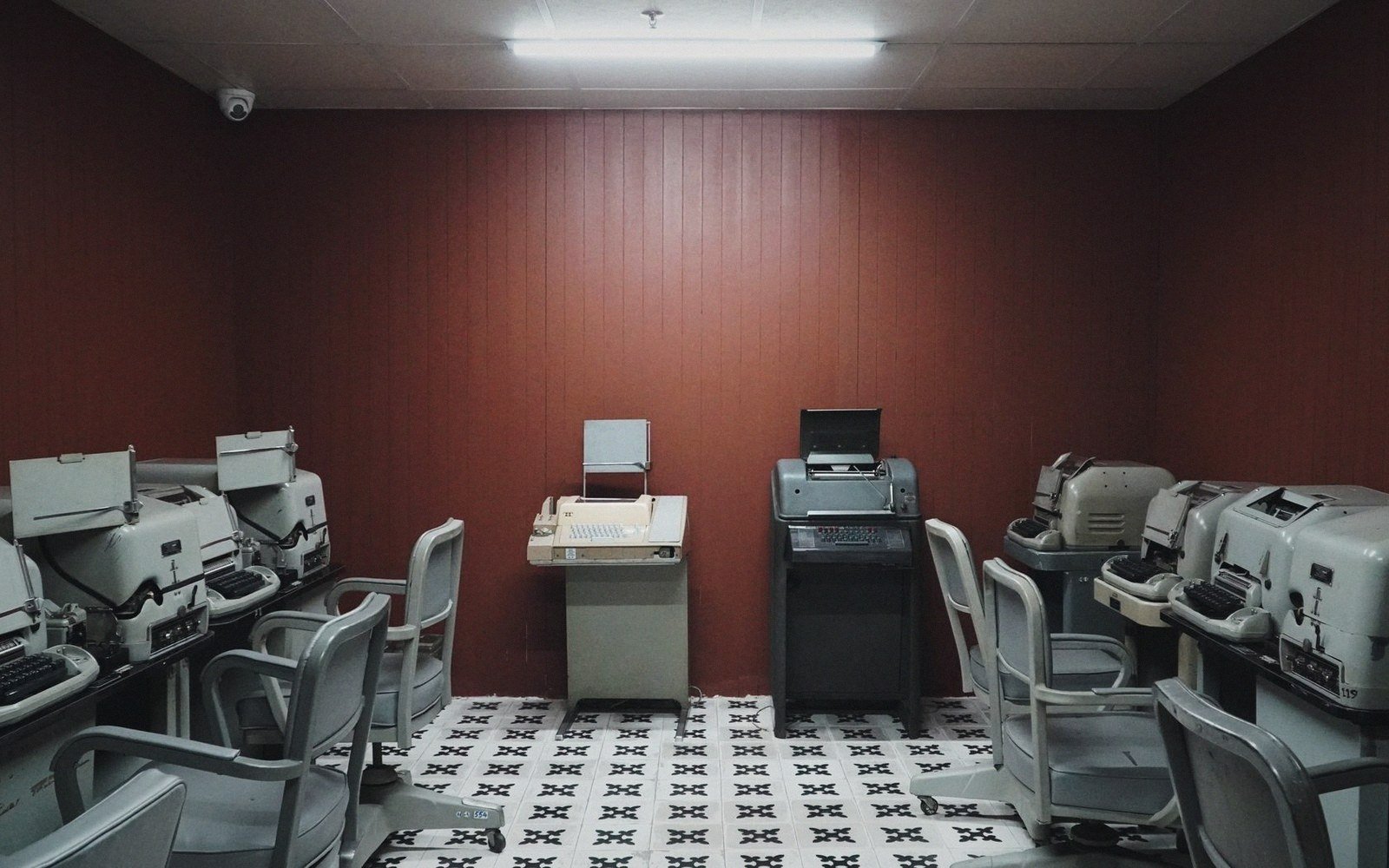
What remained was the clerical track, which continued to exist and continued to be staffed predominantly by women — machine grades that were defined by the older, lower-status conception of the work. The women who stayed in those grades were not doing less technically demanding work than they had been doing before the reclassification; the work had not changed, but the description of the work had, and description is what pay scales follow. The entry requirement was not a measure of what the job needed. It was a marker of who the job was now for.