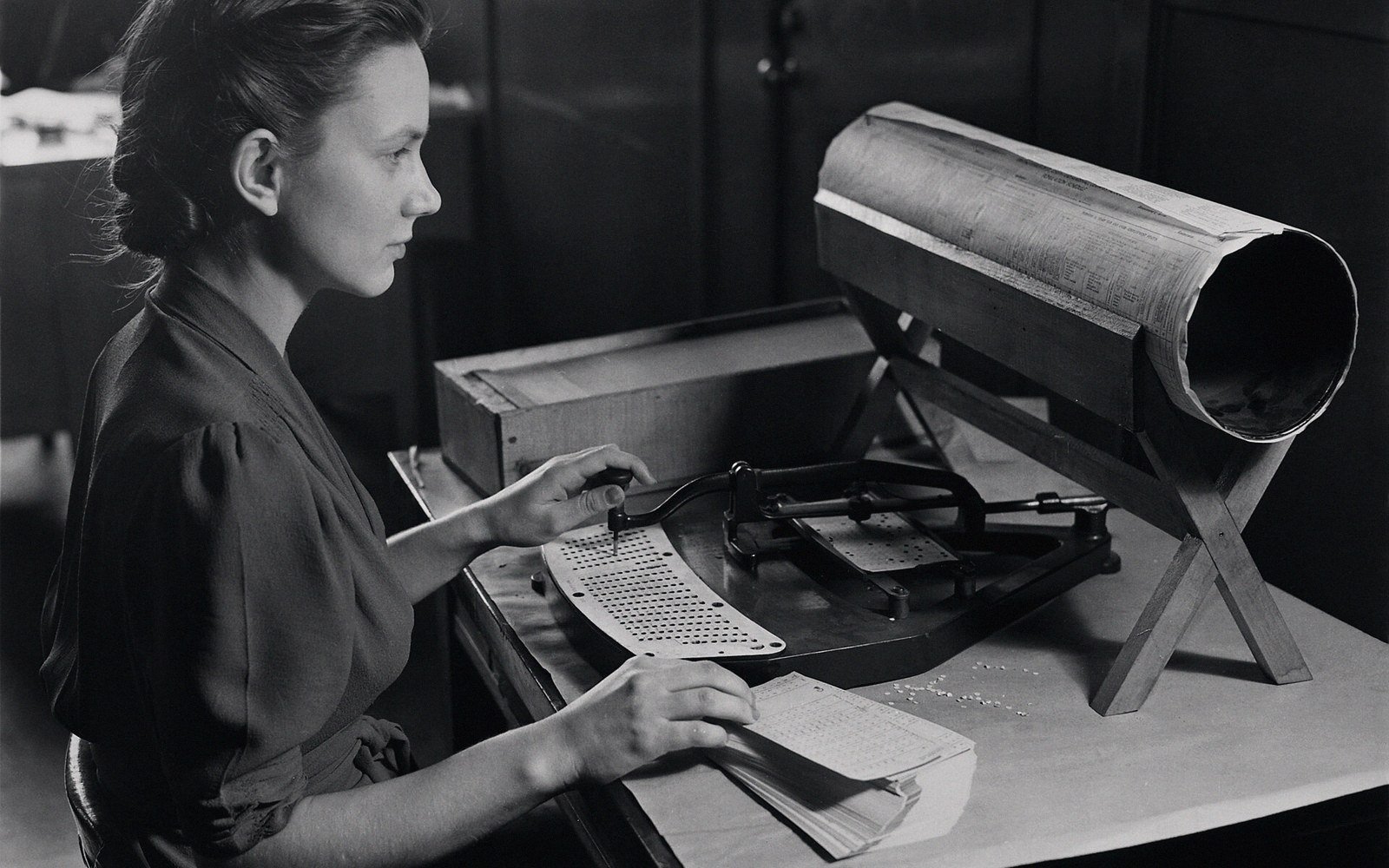
Classification did the work that prejudice would have been too obvious to do alone.
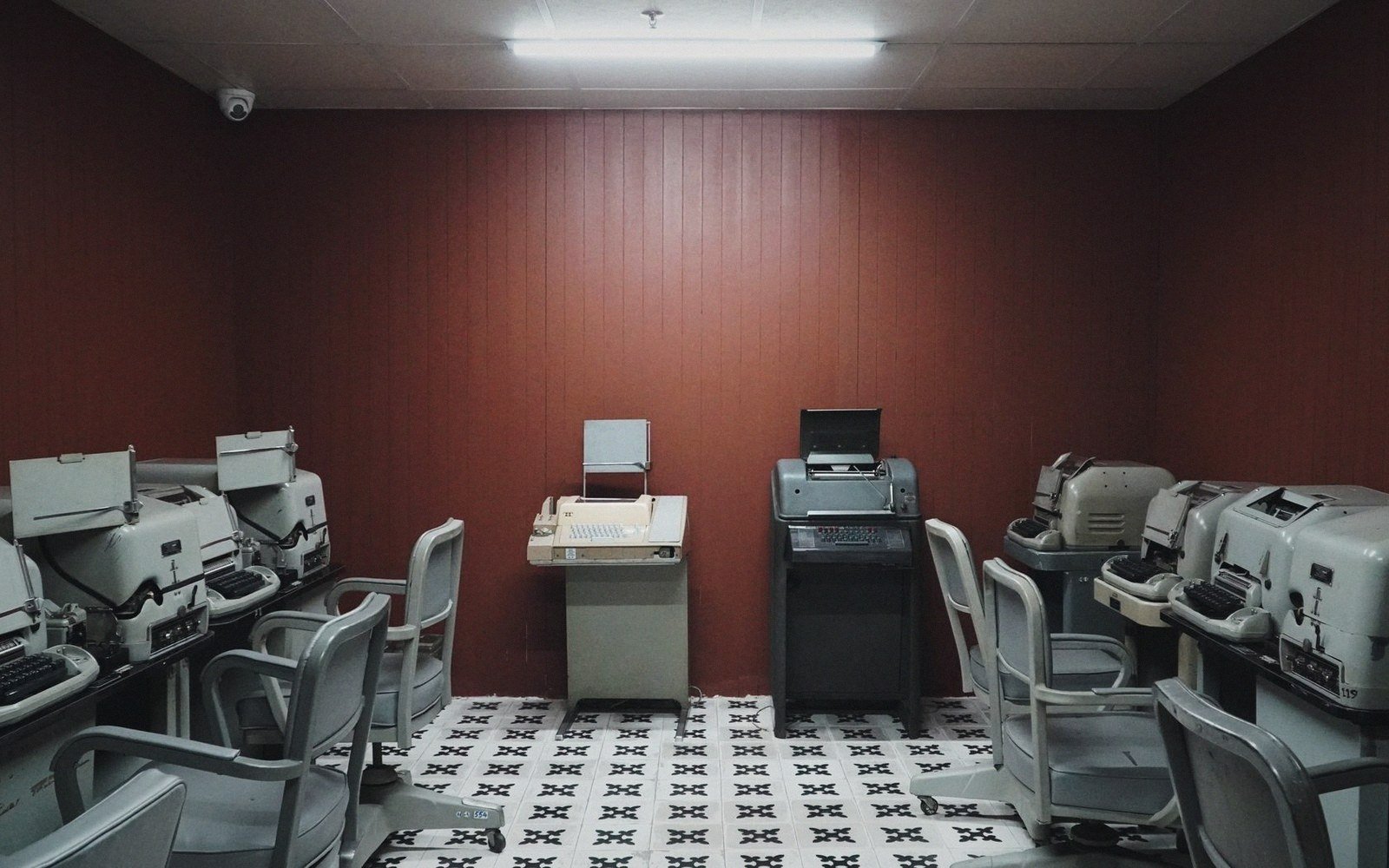
When large-scale punched-card installations became standard in British government departments and commercial offices during the 1940s and 1950s, someone had to decide where machine operators sat in the existing hierarchy. That decision — seemingly administrative, actually structural — was made before women dominated those roles, and it locked in consequences that lasted decades.
- 1940s–1950sPunched-card machine rooms established as standard in government and commercial offices; operator grades set below clerical judgement work
- Mid-1950sAptitude tests introduced for programming selection; machine operators not systematically directed toward them
- Late 1950s–1960sProgramming formalised as a distinct, upward-reclassified occupation; new grade filled largely by external recruitment
- Each reclassificationReset the eligible workforce rather than building on existing machine-grade staff
The civil service grading framework, already elaborate, placed machine operators below the clerical grades that required judgement and above only the most routine manual work. In practice this meant a ceiling: operators could not advance through normal incremental steps into analytical or supervisory positions without a separate competitive process. The work was classified as mechanical rather than cognitive, and the grade was set accordingly. Pay followed classification, not skill.
Private sector employers adopted similar logic by a different route. The British Institute of Management and various industry bodies produced guidance on office organisation in the early postwar years that treated the machine room as a production floor. The card room — punched-card sorters, verifiers, tabulators — was scheduled and supervised like factory output. Job descriptions written in that frame attracted the clerical grades that already existed for routine work, and the women hired to do it were absorbed into those grades without friction. The fit felt natural because the categories had already been built to hold that kind of work at that level.

The structure of the ceiling
Grade structures matter most not because of starting pay but because of where they permit movement. A woman entering as a machine operator in a large installation — the General Post Office, a nationalised industry's data centre, a bank's tabulating department — entered a classification that had defined promotion paths, and those paths ran sideways or not at all. Senior operator, supervisor of the machine room: these were the available destinations. The route from machine operation into what would shortly be called programming was not a promotion route; it was a reclassification, which required a separate application, a different grade structure, and often a different employer.
- Starting pay
- set by classification of work as mechanical, not cognitive
- Promotion ceiling
- senior operator or room supervisor; no embedded path to programming
- Access to aptitude testing
- dependent on knowing the route existed, which grade structure did not signal
- Portability
- machine-grade experience was not formally recognised as a qualification for programming roles
This matters because the early history of computing in Britain includes a substantial number of women who moved from machine operation into programming precisely by that route — but the structure did not encourage or systematise it. Those who made the move did so against the grain of how grades were designed. The grades assumed that machine operation was terminal rather than preparatory.
Grade structures are not usually understood as instruments of exclusion because they apply formally to jobs, not people.
Aptitude tests introduced from the mid-1950s onward — the Civil Service's own instruments, and those used by commercial bureaux — were in principle neutral gateways to programming roles. In practice, aptitude testing was administered to people who already knew it existed and applied to take it. Machine operators often did not, because the grade structure presented no obvious next step. The test was a door; the grade was a wall in front of it.
What reclassification did
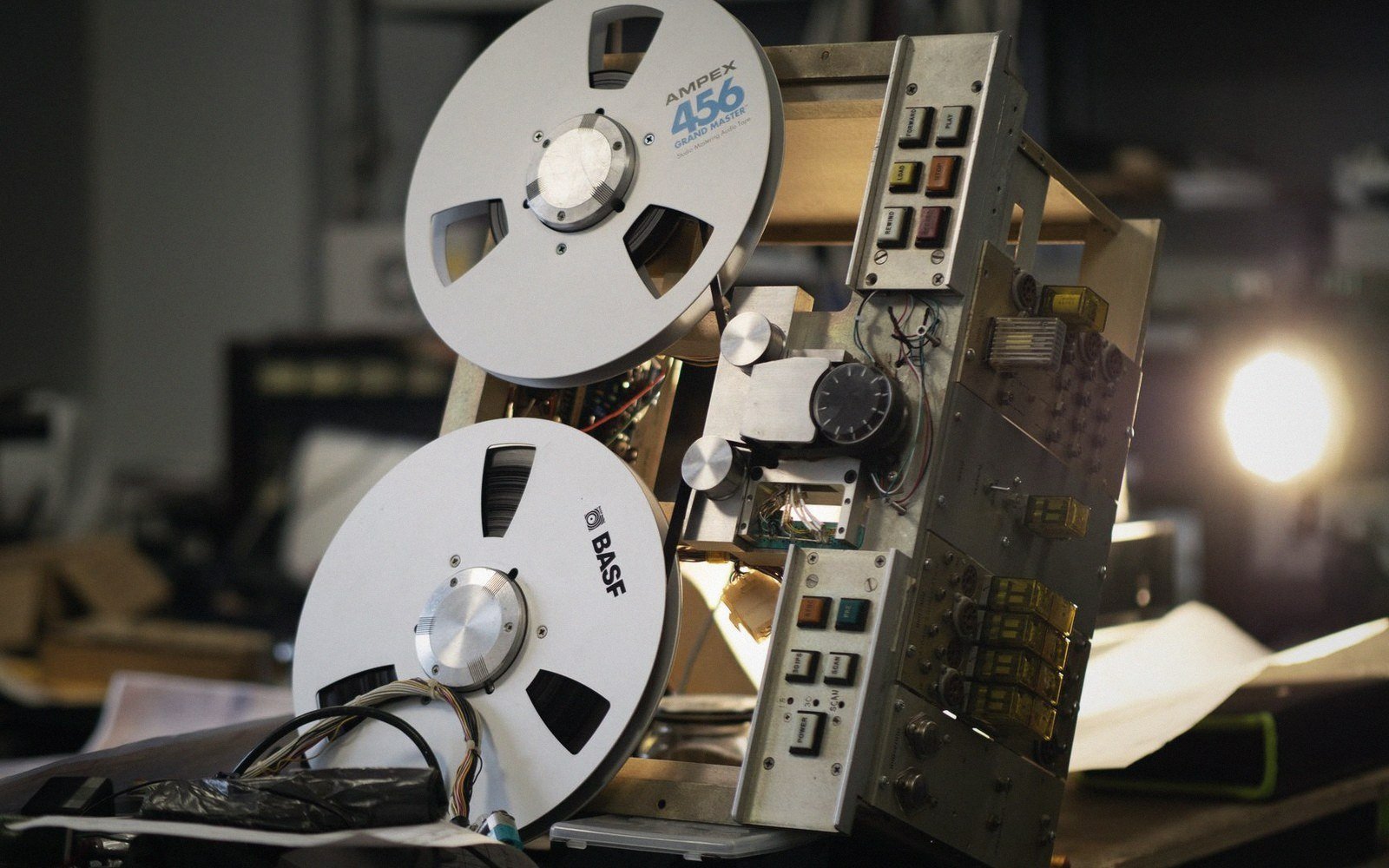
When programming was formalised as a distinct occupation in the late 1950s and into the 1960s, it was graded upward — above clerical, toward technical or professional classification. This was a reasonable response to the genuine complexity of the work. It also had the effect of creating a clean break between the new grade and the one below it. Women already in machine operation grades did not automatically transfer. The new grade was filled largely by recruitment from outside, often with formal qualification requirements attached.
The consequence was a one-way valve. As computing shifted from machine operation to programming and then to analysis, each reclassification reset the population eligible to fill the senior roles. Each reset happened at a point when the pipeline into the new grade was designed fresh, without inheriting the workforce that had been doing adjacent work. The women in the machine grades had built real technical knowledge — of data flows, error patterns, processing sequences — and that knowledge was not formally recognised as a qualification for the next thing.

Grade structures are not usually understood as instruments of exclusion because they apply formally to jobs, not people. What they do is determine which jobs lead to which other jobs. In the machine grades, as in the card room before them, the design of the ladder decided who could climb it — and the rungs stopped where the work was still visibly female.