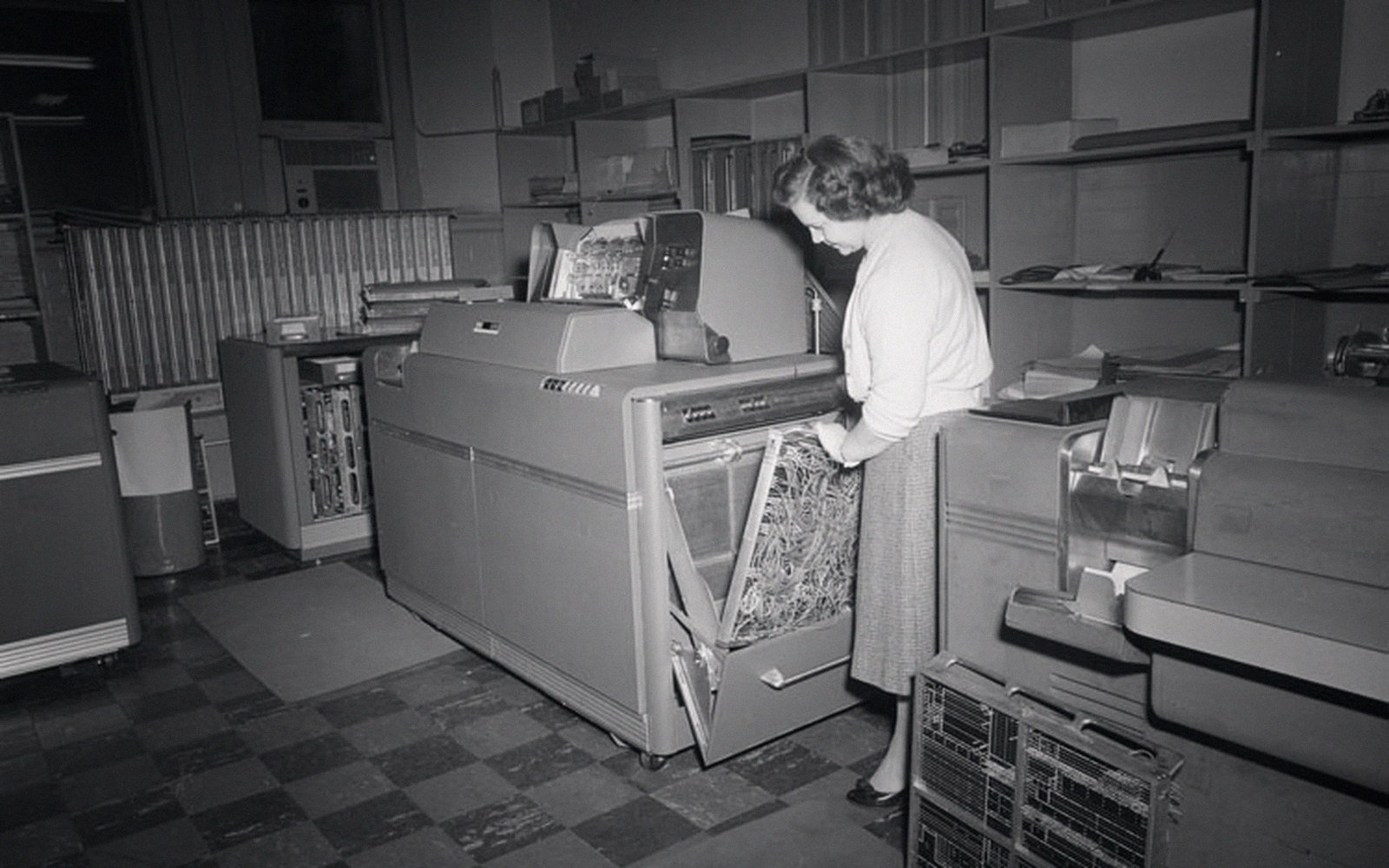
The punched card did not arrive with the computer. By the time the first commercial machines were installed in Britain in the early 1950s, the card room had already existed for a generation — a sealed, noisy department tucked somewhere between the typing pool and the post room, running payroll, stock control and billing on equipment that sorted, collated and tabulated at speed. The machines were impressive. The work was not considered to be.
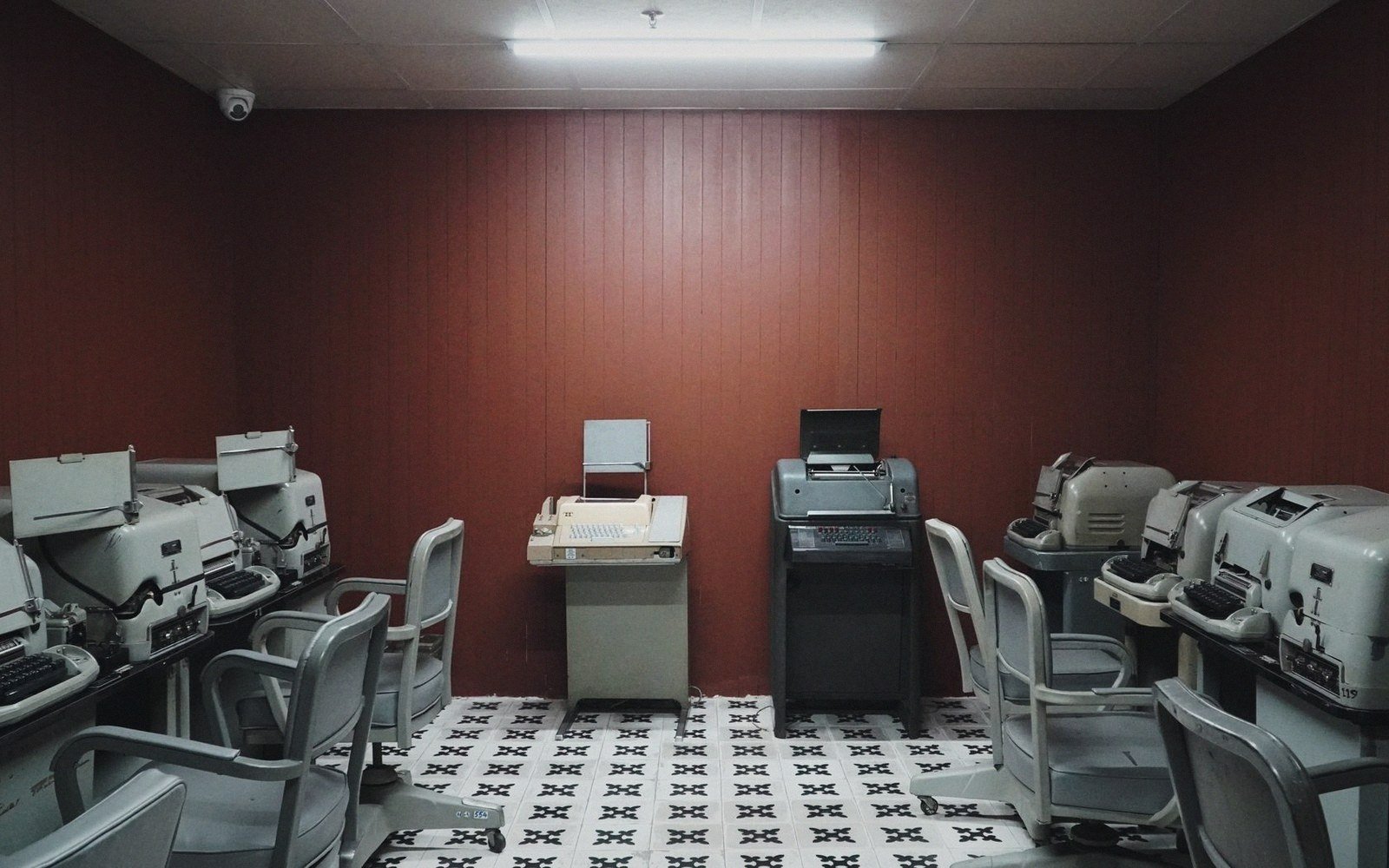
Understanding why requires looking at the room itself: who was in it, how it was organised, and what it was classified as.
The room and its logic
A punched-card installation in a large British company or government department of the 1940s and 1950s was arranged as a production line in all but name. Cards arrived — from timekeepers, from warehouse clerks, from invoicing — and were fed through a sequence of machines: the key punch, where an operator transcribed source data into holes; the verifier, where a second operator checked it; the sorter, which reordered the deck by any chosen column; the collator, which merged decks; and the tabulator, which read the result and printed the totals. Each stage was distinct, each required a trained operator, and the throughput of the room was measured in thousands of cards per hour. The scheduling and discipline were those of a factory floor, not a clerical office — batch deadlines, machine utilisation rates, error logs.
- Pre-1939Punched-card installations established in large British organisations (local authorities, insurance, civil service)
- Early 1940s–50sCard-room workforce overwhelmingly female; classified under clerical grades; marriage bar in force
- Early 1950sFirst commercial computers installed in Britain; card rooms intensify rather than diminish
- c.1955–mid-1960sBrief period of permeability between card-room operation and early programming roles
- Mid-1960s onwardProgramming reclassified upward; formal qualifications attached; card room left at sub-clerical data-preparation grade
The workforce was almost entirely female. This was not incidental. Key-punch operation was positioned from the outset as an extension of typing: it required speed, accuracy and repetitive dexterity, and it attracted the same grade and pay as the senior end of copy-typing. Supervisors — usually women — managed the daily schedule and the error rates, but they reported to a (usually male) installation manager whose status derived from the machinery, not the operation. The machines were capital equipment. The operators were overhead.

This split between the prestige of the technology and the status of the people running it was structural, not accidental. Punched-card equipment was supplied in Britain primarily by British Tabulating Machine Company and Powers-Samas, both of which sold and leased their machines on service contracts. The manufacturer's representative — always presented as a technical authority — dealt with the installation manager. The operators dealt with the machines. The hierarchy was legible without anyone stating it.
Grade, pay and the ceiling
Because key-punch and tabulator operation was classed as clerical work, it fell under the clerical grades that governed most large British employers: local authorities, insurance companies, the civil service, the nationalised industries. Within those grades, machine operation was typically placed at a middle band — above routine filing and copy-typing, but well below the analytical grades that handled the interpretation of the tabulator output. That interpretation — deciding what the figures meant, how the reports should be read, what action they implied — was done by men in substantive clerical or administrative posts. The women produced the numbers; the men read them.
- Key-punch operator
- Middle clerical band; equated with senior copy-typing
- Verifier operator
- Similar band; quality-check function
- Card-room supervisor
- Senior clerical; managed throughput, reported to installation manager
- Installation manager
- Typically male; technical authority; interface with equipment supplier
- Analytical/administrative grades
- Read and acted on tabulator or computer output; distinct from and above card-room hierarchy
The grade ceiling was reinforced by the marriage bar, which required women in many of these organisations to resign on marriage. Since women entered the card room young and often worked there through their twenties, the bar reliably removed the most experienced operators before they could accumulate enough seniority to challenge the division between operation and analysis. It also meant that institutional knowledge — the understanding of which runs needed special handling, which data sources were unreliable, how to recover a corrupted sort — left with the women who held it. Experience did not compound.
What remained was a workforce that was trained to a high operational standard, thoroughly productive and almost entirely invisible to the organisation's sense of itself. Annual reports described "Hollerith installations" or "Powers-Samas equipment"; they did not describe the women who ran them. The machines had names; the operators had grades.
The arrival of the computer and what it changed
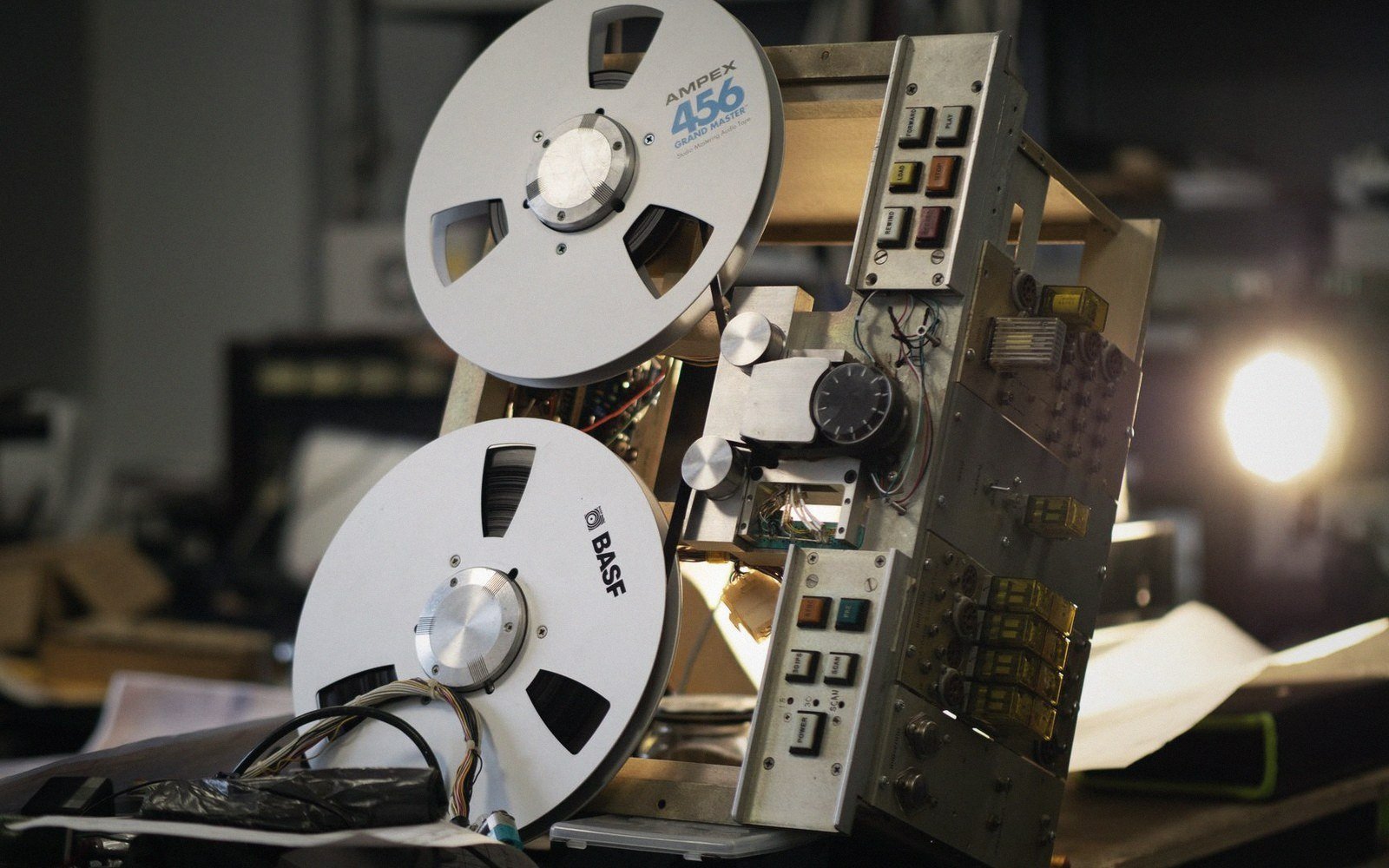
When the first commercial computers arrived — LEO at J. Lyons, the early Ferranti and ICT installations at large insurers and utilities — the card room did not disappear. It intensified. Punched cards were the primary input medium for the first generation of commercial computers, and the volume of key-punch work increased as batch processing replaced manual tabulation. The room that had fed the tabulator now fed the computer, and its organisation remained unchanged: female operators, clerical grades, throughput measured in cards per shift.
The scheduling and discipline were those of a factory floor, not a clerical office — batch deadlines, machine utilisation rates, error logs.
What the computer's arrival did change was the status of the work above the card room. Programming, systems analysis and computer operation were new roles without settled definitions, and in the early years they were sometimes filled by people promoted from the card room — women who understood data preparation, understood the shape of the jobs, and could be trained on the new equipment. The period from roughly 1955 to the mid-1960s is, by the historical record, the closest the British computing industry came to a permeable boundary between operation and analysis.

It did not last. As the value attributed to programming rose, the role was progressively reclassified. Formal educational requirements were attached to it. Aptitude tests were introduced — instruments that measured some combination of logical reasoning and prior exposure to systematic thought, and that were designed and normed in ways that reflected the profile of those already in the analytical grades. By the time qualifications were formalised as entry requirements, the women in the card room were on the wrong side of them — not because they lacked capability, but because the classification process had been designed around a different starting point.
The card room continued. Its grades were not reclassified upward to reflect the increased complexity of computer input work; they were, if anything, formalised downward as data preparation — a sub-clerical support function rather than a semi-skilled technical one. The prestige of the machinery passed to the computer; the operation of the card room was left where it had always been. The division between the room that produced the data and the room that processed it became the division between the women who prepared the cards and the men who wrote the programs, and it was written into grade structures that would take decades to shift.
The card room is, in this sense, not merely a piece of computing prehistory. It is the original template for an arrangement — women's labour as infrastructure, men's labour as intellect — that the subsequent history of the British computing industry reproduced at each point where a new technology allowed the hierarchy to be reinscribed.